 FoodKnower
Basic
$0
A free plan for trying FoodKnower and keeping up with occasional scans.
- 10 free scans to get started
- Then 3 scans per day
- Full Food Integrity and Portion Control scores
Take a picture of any food: restaurant meals, packaged foods, drinks, raw ingredients, you name it. Get an instant rating of how good it is.
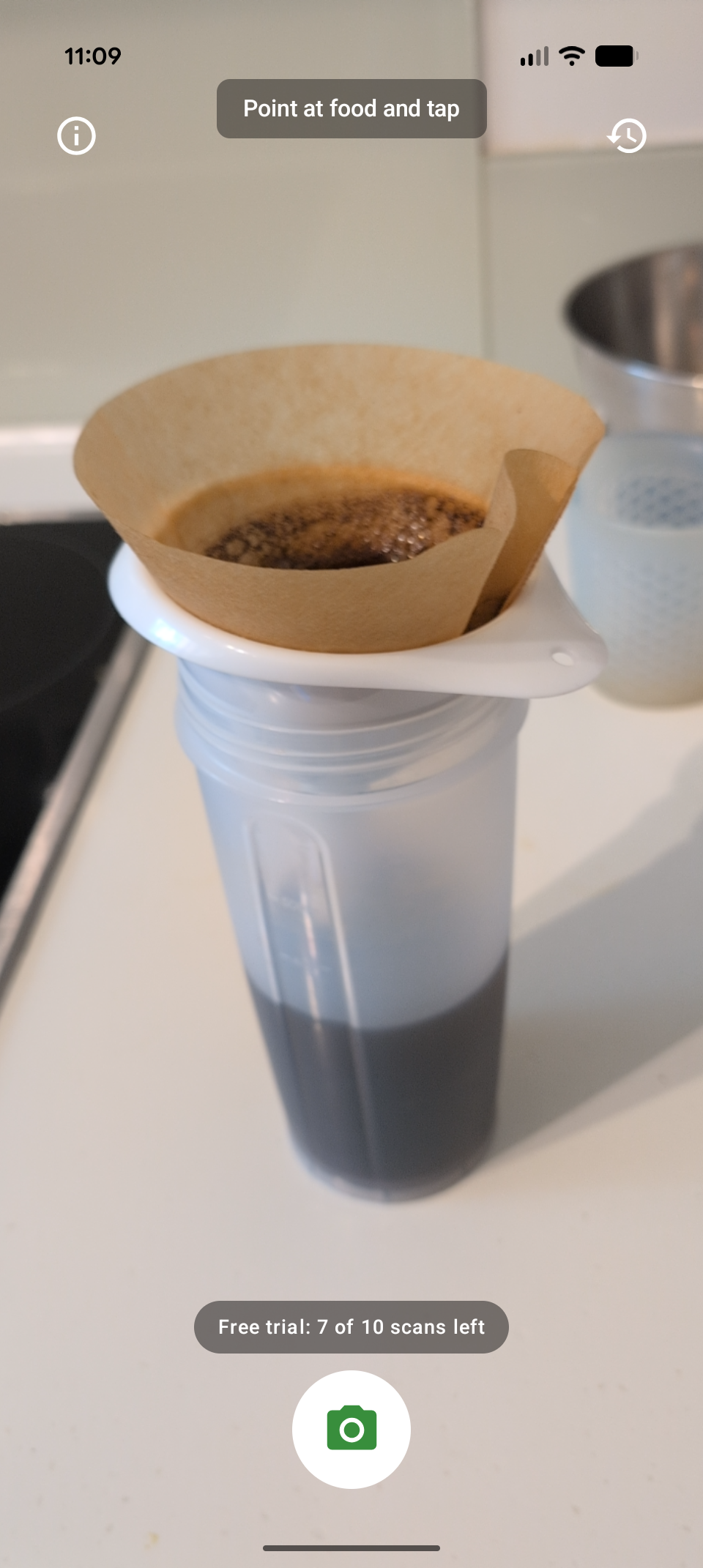
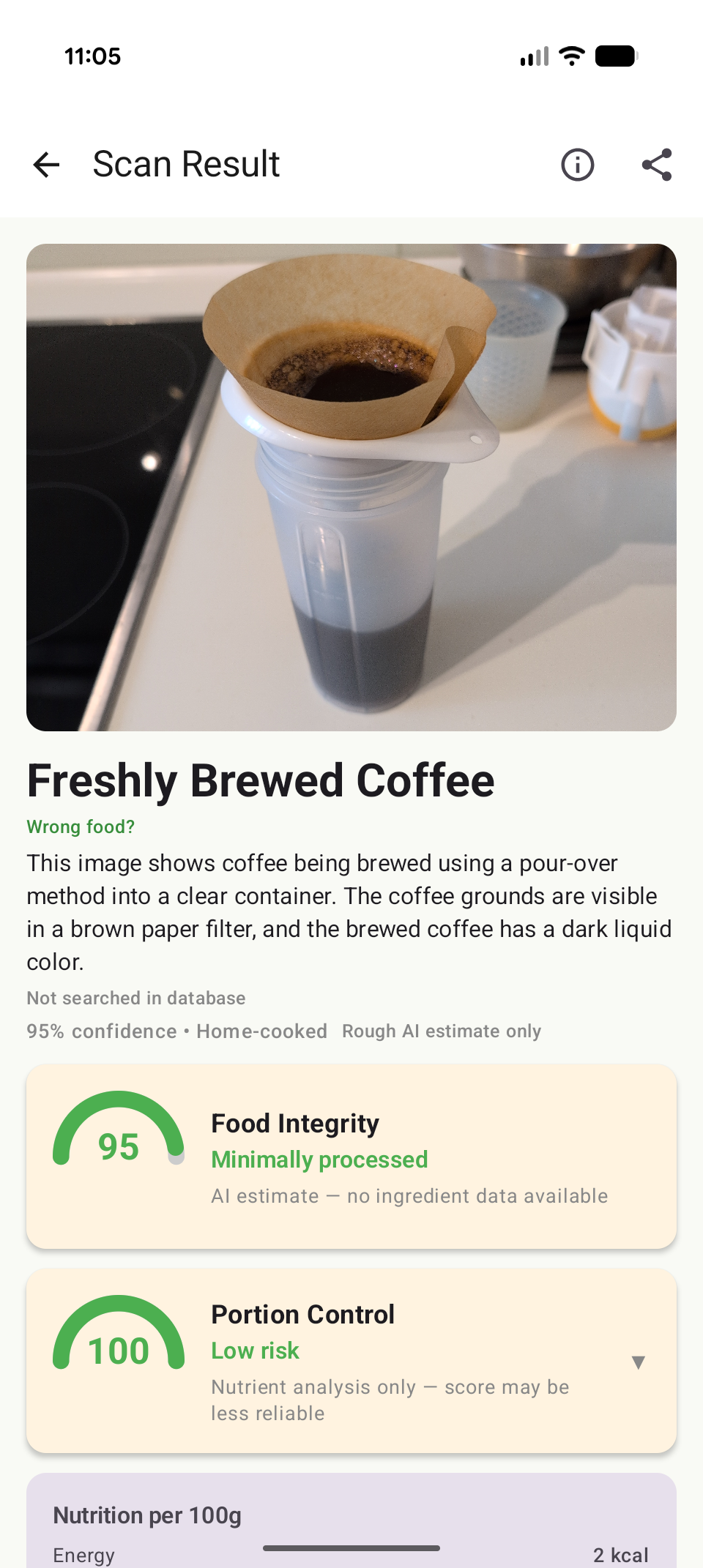
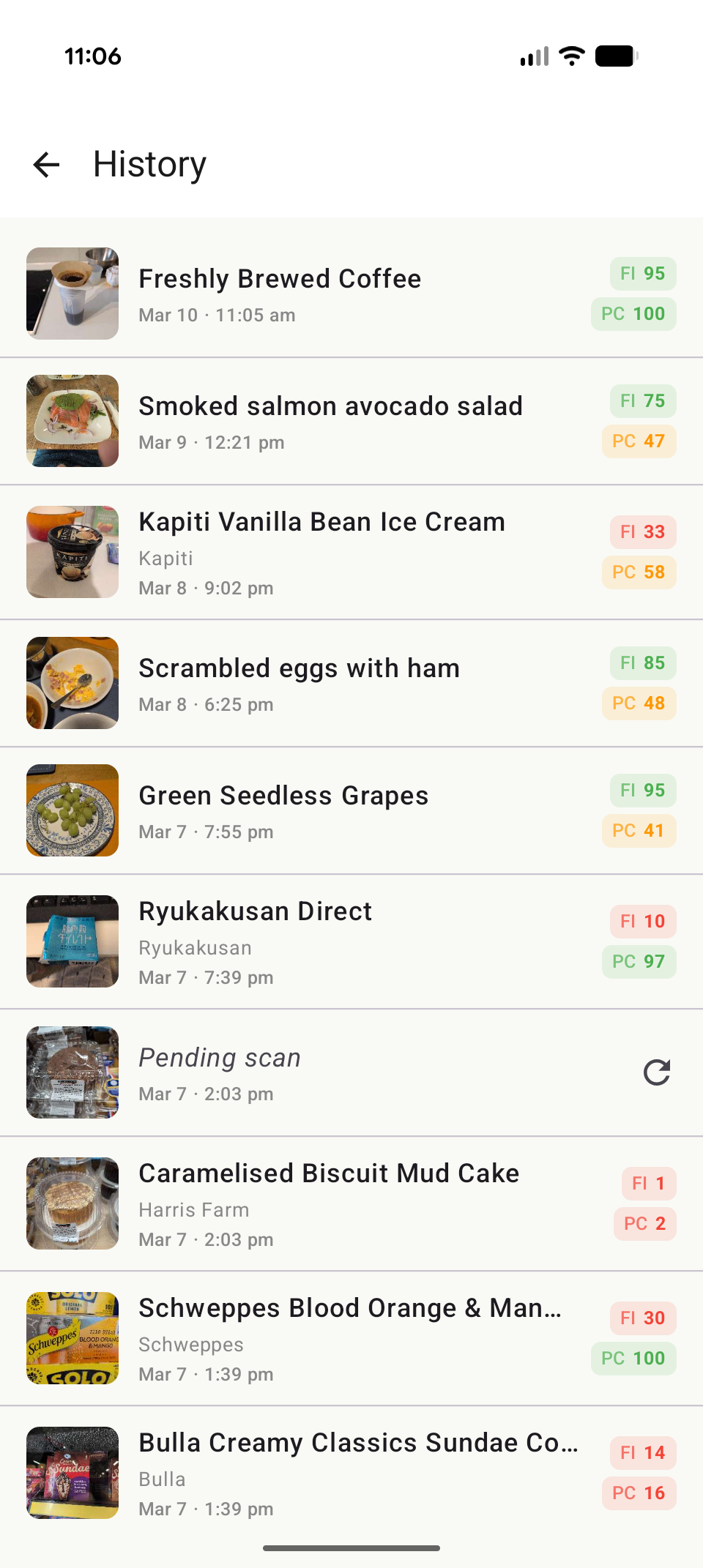
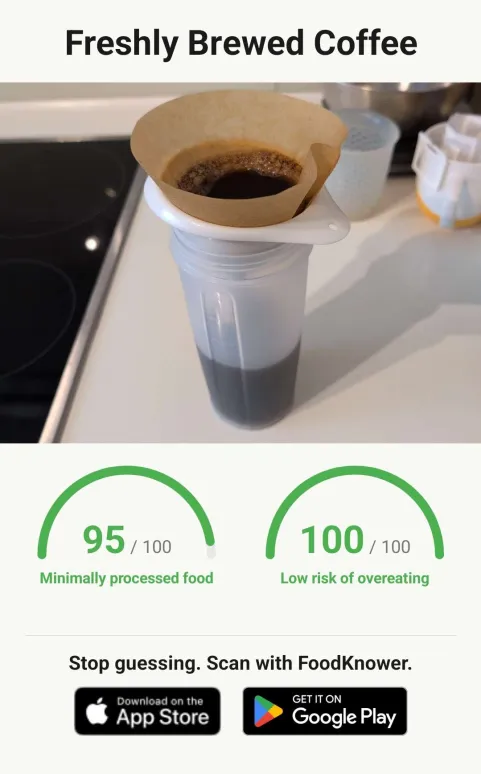
FoodKnower rates your food on the two things that matter for healthy eating.
Is your food industrially processed?
Does your food let you naturally feel full?
Everything you need to make informed food choices.
Packaged foods are matched against the Open Food Facts database and scores calculated with our proprietary formula.
Any photo can be identified, whether it's a restaurant meal, a half-eaten snack, or a packaged product.
We value your privacy and don't store any of your photos on our servers.
Three steps to knowing exactly what you're eating.
Point your phone at any food — a restaurant meal, a packaged product, a home-cooked dish — and snap a picture.
In seconds, see how processed your food really is and how likely it is to make you overeat.
Use your scores to make better choices. Over time, build habits that stick — no calorie counting required.
"It has additives and chemicals, it's junk food."
That's right. Junk food is easy to overeat, because it bombards you with artificial flavors, and that makes you eat more and more.
But is all natural food good? No. A freshly home baked cookie, thick and chewy, melting in your mouth, is all natural, but you'll still eat hundreds of calories and want more.
Up to now, most diet approaches only look at one side. Don't eat carbs, or fat, or anything with additives. Or you just look at the Glycemic Index or 'satiety score'.
That's a blind spot. You need to know what's been done to your food. And you need to know what your food will do to you. You need the whole truth.
Like many people, I've always wanted to keep my weight under control. I've tried all kinds of diets, like low fat, low carb, no sugar and starch, intermittent fasting... they would all work for the first few months, but then stop having any effect. How could this be? Is it a lost cause, and weight loss drugs like Ozempic the only way forward?
Something kept nagging at me. What if there was something common to all these diet plans? Then it hit me:
Plain white rice. People in Asia eat rice every day without getting fat. There was an argument on the low carb forums — how can they eat so much rice without becoming overweight? There was no good answer.
So I consulted the latest nutrition science. It turns out that white rice is fine, just like potatoes and pasta! What Fazzino's hyperpalatability research shows is that we overeat because our food has been engineered to make us overeat. They bypass the signals of fullness that make portion control feel natural.
And yet, we can also overeat natural foods: a home baked cookie, potato chips. Browsing through many food and nutrition apps, I found there were none that focused on both food quality and portion control. So that's why I created FoodKnower: to share the research with everyone, in a way that's simple and convenient to use.
I reached my target weight in nine months, without once feeling hungry. I wish I found this out many years ago.
— Brian Lui, Founder of FoodKnower
Start free, then upgrade when you want more scans.
$0
A free plan for trying FoodKnower and keeping up with occasional scans.
$4/mo $2/mo ($20 per year)
For people who want FoodKnower available every day, without worrying about limits.
Sale pricing is available before launch.